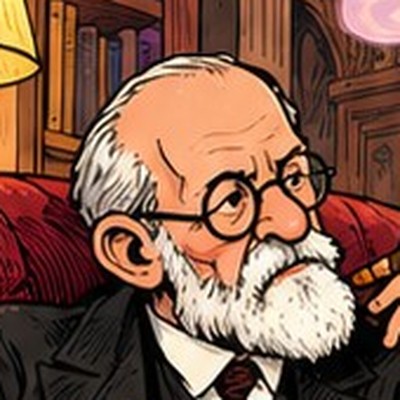
Why are there three of me arguing?

It’s 1am. You’re in bed. And you have the thought. Text him.
Immediately, a meeting begins inside your head.
The first voice is loud and has no patience. “Text him. Right now. You miss him. You want to. Do it.”
The second voice sounds a lot like your mother, your best friend and every self-help account you follow, all at once. “Absolutely not. Have some self-respect. After what he did? What would people think? You should be ashamed you even considered it.”
And then there’s the third voice. The tired one. The one trying to keep everyone calm. “Okay, okay. What if we don’t text him… but we just look at his Instagram story? Just to see. That’s a compromise. Everyone’s happy.”
Nobody’s happy.
Or it’s Monday morning and your boss sends you an email that makes you want to throw your laptop out of the window. Voice one wants to reply in capital letters. Voice two reminds you that you’re a professional and a good person who doesn’t do that. And voice three types: “Sounds good! Thanks so much!” with an exclamation mark you don’t mean.
So why are there three of you in there, and why can’t they ever agree?
The answer is that you’re not one person. You’re a committee. And two of the most famous thinkers in history, 2,300 years apart, came up with almost the exact same committee.
Freud never said “id,” “ego” or “superego”
You know the three words. Id, ego, superego. They’re on every psychology poster, in every intro textbook, in every “which Freudian part of the mind are you?” quiz. And Freud never wrote any of them.
Freud wrote in German. And in 1923, in a book called Das Ich und das Es, he used three very ordinary, very simple German words.
Das Es. Literally: the It.
Das Ich. Literally: the I.
Das Über-Ich. Literally: the Over-I, or the Above-I.
That’s it. Words a child could understand. When a German speaker read Freud, they read about “the I” and “the It,” and it felt personal. The I is you. The It is the thing inside you that isn’t quite you.
Think about how we actually talk. “I don’t know what came over me.” “Something got into me.” “It just happened.” That’s the It. Freud chose a word that sounds exactly like how it feels.
So where did the Latin come from? When Freud was translated into English, his translators, most influentially James Strachey, turned these plain words into Latin: id for “it,” ego for “I,” and super-ego for “over-I.” The idea was to make psychoanalysis sound serious, medical and scientific for English-speaking doctors. And it worked. It also made Freud sound much colder and more technical than he actually was. Imagine if someone translated “I’m hungry” as “the ego experiences nutritional deficit.” Same meaning. Completely different vibe.
Later, the psychologist Bruno Bettelheim wrote a whole book complaining about this, arguing that English readers had been given a clinical, distant Freud instead of the warm, literary one German readers got. He had a point.
Where did Freud get the idea of calling it “the It”? He borrowed it from a doctor named Georg Groddeck. And Freud himself pointed out that Groddeck had got it from… Nietzsche. The man turns up everywhere.
One last crime while we’re here. When people say “he has such a big ego,” they mean he’s arrogant. That’s not Freud’s ego at all. Freud’s ego is just the part of you that’s trying to manage everything. It’s not arrogant. If anything, it’s exhausted.
So from now on in this course, I’ll use both. Id, ego and superego, because that’s what you’ll see everywhere. And the It, the I and the Over-I, because that’s what Freud actually meant.
Plato: The charioteer and his two horses
Meet Plato. Athens, around 400 BC. Socrates’ most famous student, and the reason we know anything about Socrates at all. After Socrates was executed, Plato spent his life writing dialogues starring his old teacher, a bit like a fan who keeps making films about his favourite celebrity. He also founded a school called the Academy, which is where the word “academic” comes from. So every time you complain about academic reading, you can blame Plato personally.
In one of his dialogues, the Phaedrus, Plato describes the human soul with an image so good that people are still using it today.
Picture a chariot pulled by two horses, with a driver holding the reins.
The first horse is white, tall and beautiful. It’s well-behaved, it cares about honour and doing the right thing, and it feels shame. You don’t need to whip this horse. You just tell it what to do and it listens.
The second horse is dark, crooked and wild. Plato gives it bloodshot eyes and describes it as loud, badly behaved and barely able to hear the driver. It wants what it wants, now. Whips barely work on it.
And the charioteer is reason: the part of you that’s supposed to be in charge, trying to steer both horses in the same direction.
Then it gets dramatic. Plato describes what happens when the charioteer sees someone beautiful. The dark horse goes wild. It charges forward, dragging everyone towards the person, wanting only one thing, and you can guess what that is. The white horse holds back, full of shame. The driver pulls so hard on the reins that the dark horse’s mouth bleeds. And this happens again and again, until eventually the dark horse learns, and the whole team can approach the person calmly and respectfully.
So yes: Plato wrote about the 1am text two and a half thousand years ago. With horses.
In another book, the Republic, Plato gives the three parts proper names. Reason, which thinks and decides. Spirit, the part that feels anger, pride and honour, that gets offended and wants to be respected. And appetite, the part that wants food, drink, sex, money and comfort.
He even tells a very weird story to prove they’re separate. A man called Leontius is walking past a place where dead bodies are lying on the ground after an execution. He really, really wants to look. He’s also disgusted with himself for wanting to look. He fights with himself, covers his eyes, and then finally gives up, runs over, opens his eyes wide and shouts at them: “There you go, you wretches, have a good look!”
He’s literally yelling at his own eyes. That’s appetite winning, and spirit being furious about it. We’ve all done a version of this. Maybe not with corpses. Maybe with a reality show you’re ashamed of watching.
For Plato, a healthy person is one where reason is in charge, spirit is on reason’s side, and appetite is kept under control. Everyone doing their own job. Like a well-run company, or at least a well-trained team of horses.
Freud: The It, the I and the Over-I
Remember Freud’s house from chapter 2, with the crowded hall, the living room and the bouncer at the door? In 1923, Freud realised it had a problem. The bouncer himself, the part of you pushing painful stuff away, isn’t something you’re aware of either. You don’t decide to repress something. It just happens. So the map needed redrawing. And this time, instead of rooms, Freud gave us characters.
The It is the oldest resident. You’re born with it. It’s pure wanting: hunger, desire, aggression, pleasure. It follows one rule, which Freud called the pleasure principle: I want it, and I want it now. It doesn’t care about time, logic, other people or consequences. It can want two opposite things at once and see no problem. Freud described it as a boiling pot of urges. Think of a hungry baby screaming at 3am. That baby doesn’t care that you have work tomorrow. That’s the It in its purest form, and it never fully grows up.
The I develops as you bump into reality. You learn that you can’t have everything immediately, that other people exist, that fire is hot. The I follows the reality principle: okay, but how do we actually get this without disaster? It’s the manager, the negotiator, the one trying to keep things running. Remember the rider and horse from chapter 1? That’s the I, riding the It.
Freud said the poor I serves three harsh bosses at the same time. The outside world, with its rules and consequences. The It, screaming for what it wants. And the third one, who might be the worst of all...
The uncomfortable part: the Over-I can be much crueller than your actual parents ever were. It doesn’t just punish what you do. It punishes what you think and want. You didn’t even send the text, and you still feel guilty for wanting to. That’s the Over-I at work.
So let’s go back to 1am. “Text him right now” is the It. “Have some self-respect, what would people think” is the Over-I. And “What if we just look at his Instagram story?” That’s the I, desperately trying to find a deal that keeps everyone quiet.
“Sounds good! Thanks so much!” to your boss? Also the I. Your It wanted to throw the laptop. Your Over-I wanted you to be a good, polite professional. The I found the exclamation mark.
And notice: for Freud, most of this committee meeting happens below the surface. The It is completely unconscious. The Over-I mostly is too. Even a big part of the I is. You only hear the final decision, not the argument.
Who should be in charge of you?
Tonight: a man who founded the first Academy versus a man who founded his own school of therapy and fell out with half its students.
Is this the same committee?
Almost. Plato’s reason and Freud’s I are both the driver, the one trying to steer. Plato’s appetite and Freud’s It are both the wild part that wants food, sex and pleasure right now. That’s the obvious remake.
But the third member is different. Plato’s spirit, the white horse, is proud, honourable and on reason’s side. It’s a teammate. Freud’s Over-I isn’t really a teammate. It’s your parents’ voice living in your head, and it can turn on the I just as hard as the It does.
So in Plato’s chariot, it’s two against one. In Freud’s committee, it’s the I against everyone.
So who should rule?
What would they say to each other?
Imaginary as always.
So who wins?
No winner, but a very useful split. They agree that you’re not one person, that inner conflict is completely normal, and that someone has to hold the reins.
Where they differ is the ideal. Plato wants a monarchy: reason on the throne, everyone else obeying. Freud wants a working coalition government: nobody fully in charge, constant negotiation, and success means the country doesn’t collapse.
So next time you catch yourself compromising with “I’ll just look at his story,” you can decide: is that a failure of Plato’s charioteer, or a small diplomatic victory for Freud’s I?
You’ve seen this before
No-jokes box
The terms: Freud’s structural model (1923) uses the German words das Es (“the It”), das Ich (“the I”) and das Über-Ich (“the Over-I”). The Latin terms id, ego and super-ego come from his English translators and were standardised in James Strachey’s Standard Edition. Bruno Bettelheim argued in Freud and Man’s Soul (1983) that this made Freud sound more clinical than he intended. Freud took “the It” from Georg Groddeck, who in turn drew on Nietzsche’s use of the word.
Popular misuse: In everyday speech, “ego” means arrogance or self-importance. In Freud, the ego is simply the part of the mind that manages the demands of the id, the superego and reality.
Plato (c. 428–348 BC): Athenian philosopher, student of Socrates and founder of the Academy. In the Phaedrus, he compares the soul to a charioteer (reason) driving two winged horses: one noble and obedient, one unruly and driven by desire. In the Republic (Book IV), he divides the soul into reason (thinking and deciding), spirit (anger, pride, honour) and appetite (desire for food, drink, sex and money), and illustrates their conflict with the story of Leontius. For Plato, justice in the soul means reason ruling, with spirit as its ally and appetite kept in check.
Freud’s structural model: Introduced in The Ego and the Id (1923). The id is present from birth, entirely unconscious and governed by the pleasure principle. The ego develops through contact with reality, follows the reality principle and mediates between competing demands; it is partly unconscious. The superego forms in childhood through the internalisation of parental authority, and includes both conscience and the ego ideal; it can be harsher than the actual parents and generates guilt. Freud described the ego as serving three masters: the external world, the id and the superego (New Introductory Lectures, 1933).
Why Freud changed his model: He recognised that defensive processes like repression are themselves unconscious, so the older division into conscious, preconscious and unconscious could not fully describe the conflicts he observed.
Where they meet: Both describe the mind as divided into three parts in conflict, with one part that tries to steer.
Where they differ: Plato’s spirit is reason’s natural ally; Freud’s superego can act against the ego. Plato’s ideal is a soul governed by reason, with desire trained to obey. Freud sees the ego as a weaker mediator and the id as something that can be managed but never fully trained; excessive repression tends to produce symptoms rather than harmony.
Where to go next:
- Plato’s Phaedrus, especially the chariot passage. Short and beautifully written.
- Plato’s Republic, Book IV, for the three-part soul.
- Freud’s The Ego and the Id (1923), short but dense; read it after the New Introductory Lectures, lecture 31, which explains the same model more simply.
- Robert Louis Stevenson’s Strange Case of Dr Jekyll and Mr Hyde (1886), for fun.
Homework