Why does my family make me like this?

You’re a grown adult. You have a job, bills, a pension plan, maybe kids of your own. You walk into your parents’ house for Sunday lunch, and within twenty minutes you’re sulking at the table like you’re fourteen.
Your mum says, very innocently, “Are you going to wear that?” Five words. You’re annoyed for the rest of the day.
You swore you’d never turn into your dad. Then one day you hear yourself saying “Close the door, we’re not heating the whole street,” and you realise it’s too late.
You load the dishwasher, and then you catch yourself re-loading it exactly the way your mum does. The way you used to roll your eyes at.
Your friend introduces her new boyfriend. He’s got the same job as her dad, the same terrible jokes, and he’s even wearing the same kind of watch. Everyone at the table can see it. Except her.
You’re thirty-five, and some small part of you still wants your parents to be proud of you. You’d never say it out loud. But you still send them the photo.
So why do families get under our skin like nothing else? Why can one sentence from a parent undo years of confidence?
Freud’s answer is one of the most famous, most mocked and most misunderstood ideas in the history of psychology: the Oedipus complex. You’ve probably heard the joke version: “Freud said every boy wants to marry his mother.” Cue laughter.
But the man it’s named after, a king from a Greek play written 2,400 years ago, never wanted anything of the sort. And his real story is much darker, much stranger, and much more useful than the joke.
Oedipus didn’t have an Oedipus complex
Freud named his big theory after Oedipus, a king from ancient Greek myth, made famous in a play by Sophocles. The popular version goes: Oedipus killed his father and married his mother, so the “Oedipus complex” means secretly wanting to do the same.
Oedipus didn’t want either of those things. At all.
When Oedipus was a young man, he went to the Oracle at Delphi, yes, the same Oracle from Socrates’ story in chapter 1, and he heard a horrible prophecy: he would kill his father and marry his mother. He was so horrified that he did the only thing he could think of. He ran away from home, from the people he believed were his parents, and swore never to go back, so the prophecy could never come true.
The catch? They weren’t his real parents. He’d been adopted as a baby and nobody had told him. So by running away, he ran straight towards the people he was trying to avoid, without knowing who they were.
So Oedipus didn’t desire his mother. He didn’t even know she was his mother. He spent his whole life trying to escape his fate, and that’s exactly what delivered him into it. If anyone in Greek mythology was desperately trying not to have an Oedipus complex, it was Oedipus.
And while we’re here, another one. You’ve probably also heard of the “Electra complex,” the supposed version for girls, named after a Greek princess who wanted revenge on her mother. Everyone assumes that’s Freud too. It isn’t. It was coined by Carl Jung, Freud’s favourite student who later became his biggest rival. And Freud didn’t like the term at all. He rejected it outright.
So we have a complex named after a man who didn’t have it, and a matching complex for girls that Freud himself refused to use. Two for two.
But Freud wasn’t stupid. He knew the plot of the play perfectly well. So why pick Oedipus? To understand that, we first have to look at what actually happens in the story. And trust me, it’s much darker than the meme.
Sophocles: The actual play
Meet Sophocles. Athens, 400s BC. One of the three great tragic playwrights of ancient Greece, a superstar in his day who won the city’s drama competition more times than anyone else. He wrote over a hundred plays. Only seven survive. And one of them, Oedipus the King, is so good that Aristotle held it up as the perfect example of how a tragedy should work.
The city of Thebes is dying. A plague is killing people, crops are failing, and the people come to their king for help. The king is Oedipus: popular, clever, confident. Years ago he arrived in Thebes as a stranger and saved the city by solving the riddle of the Sphinx, a monster that ate anyone who got it wrong. As a reward, he was made king and married the widowed queen, Jocasta. They’ve been happily married for years and have four children.
Oedipus sends his brother-in-law to the Oracle at Delphi to ask what to do. The answer: the plague will end when the murderer of the previous king, Laius, is found and punished.
Oedipus, the great problem-solver, takes the case. He promises to find the killer, and he curses whoever it is, in public, in front of the whole city.
You can probably feel where this is going. The audience in Athens definitely could, because they all knew the myth. The tension comes from watching him get closer and closer, one clue at a time.
He calls in Tiresias, a blind prophet, who tells him straight out: you are the murderer you’re looking for. Oedipus is furious. He accuses Tiresias of lying, of plotting against him.
Then Jocasta tries to calm him down. She says, basically: don’t trust prophets. Laius was once told his son would kill him, so they got rid of the baby, and Laius was actually killed by robbers, at a place where three roads meet.
Oedipus goes cold. Years ago, on his way to Thebes, he got into a fight at a place where three roads meet, and he killed an older man.
Then a messenger arrives from Corinth with what seems like good news. The king of Corinth, the man Oedipus thinks is his father, has died of old age. Oedipus is relieved: he didn’t kill his father after all. And then the messenger, trying to be even more helpful, says: oh, and don’t worry about the prophecy anyway, they weren’t your real parents. I know, because I’m the one who gave you to them as a baby. I got you from a shepherd from Thebes. Your ankles had been pinned together. That’s even where your name comes from. Oedipus means “swollen foot.”
Jocasta understands before he does. She begs him to stop searching. He refuses. He has to know. She leaves, and she takes her own life.
The old shepherd is brought in and forced to confirm the truth. Oedipus finds Jocasta, and, in the most famous moment in Greek tragedy, he blinds himself.
Look at the shape of this story. Oedipus is the detective, the judge, and the criminal, all at once. The cleverest man in Greece, who could solve a monster’s riddle, couldn’t see the truth about himself. The only person who saw clearly from the start was the blind prophet. And once Oedipus finally sees, he destroys his own eyes.
Remember “know thyself,” carved above the temple at Delphi? This play is what happens when you finally do.
And one more detail. Halfway through, while trying to comfort Oedipus, Jocasta tells him not to worry, because lots of men have dreamed about sleeping with their mothers. It’s just a dream, she says. It means nothing.
Two thousand three hundred years later, a Viennese doctor read that line and thought: it means everything.
Freud: The family triangle
In October 1896, Freud’s father died. And Freud, grieving and confused by his own feelings, did something very Freud: he started analysing himself. His dreams, his memories, his childhood.
A year later, he wrote a letter to his closest friend saying he’d found something in himself that shocked him. As a small child, he had loved his mother with an intense, possessive love, and he’d been jealous of his father. And he suspected this wasn’t just him. He thought it might happen in every early childhood. And, he added, that would explain why a 2,300-year-old Greek play still grips audiences.
His argument was this. We’re horrified by Oedipus the King, but we can’t look away, because somewhere deep down, Oedipus’s fate feels familiar. The prophecy that fell on him could have fallen on any of us. His terrible destiny is like a nightmare version of feelings we all had as very young children, and then buried.
The part the jokes leave out: Freud is talking about small children, roughly between three and five years old. And “desire” here doesn’t mean adult romance. It means the huge, possessive, all-or-nothing love of a little kid.
If you’ve spent time around small children, you’ve seen it. The four-year-old who announces, completely seriously, “When I grow up, I’m going to marry Mummy.” Or Daddy. The toddler who squeezes in between their parents on the sofa, or cries when they hug. The child who wants one parent all to themselves, and suddenly sees the other parent as competition.
But the child also loves that other parent. So they’re stuck: love and jealousy for the same person at the same time. Freud called that mix of opposite feelings ambivalence, and he thought it was one of the most important things about being human.
So how does it end? The child slowly realises they can’t win. They’re small, the rival is big, and anyway, they love the rival too. So they do something clever. Instead of fighting the rival parent, they start copying them. “If I can’t have what Dad has, I’ll become like Dad.” And in the process, they take that parent’s rules, values and voice and install them inside their own head.
Sound familiar? That’s the Over-I from chapter 3. Freud called the superego “the heir of the Oedipus complex.” It’s what’s left behind when that childhood drama ends. Which is why your mum’s “Are you going to wear that?” can still hit you so hard at thirty-five. It’s not just her voice. It’s the voice you built your conscience out of.
And the boyfriend who’s basically her dad? Freud would say that our earliest relationships become the template for the ones that come later. We’re not copying our parents on purpose. We’re drawn towards what feels familiar, even when it isn’t good for us.
Now, the honest part. Freud’s version was built mainly around boys, and when it came to girls, his explanations were clumsy, and in places pretty sexist. He admitted he found women’s psychology hard to understand, and other analysts, many of them women, criticised him heavily for it. That’s a big weak spot, and it’s one of the things we’ll put on trial in chapter 12.
Many modern psychoanalysts read the Oedipus complex less literally. For them, it’s less about sex and more about a painful but necessary discovery every child has to make: I’m not the centre of everyone’s world. The people I love have relationships with each other that don’t include me. Learning to live with that, to be outside the door sometimes, might be one of the first big lessons of growing up.
And some people never quite finish learning it. Which might explain a lot of Sunday lunches.
Can you ever escape your family?
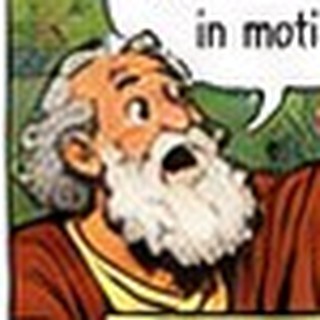
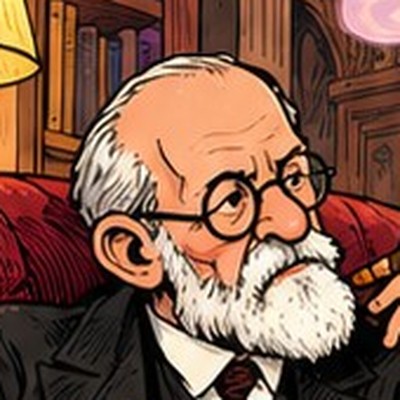
Tonight: the greatest tragic playwright of ancient Athens versus the man who turned his hero into a household word.
What’s the story really about?
Can you escape it?
Think back to the start of this chapter. “I’ll never turn into my dad.” And then: “Close the door, we’re not heating the whole street.” Running away didn’t work.
What would they say to each other?
Imaginary, of course.
So who wins?
No winner, but a very clear shared message. The past has power over us, whether you call it fate or childhood. Finding out the truth about yourself is painful, sometimes devastating. And not knowing doesn’t protect you; it just means you walk into it with your eyes closed.
Where they differ is where that fate comes from. For Sophocles, it’s written by the gods. For Freud, it’s written at the kitchen table, before you’re old enough to remember.
The practical lesson from both of them: Oedipus’s real mistake wasn’t wanting the wrong thing. It was running without looking back. If you don’t want to end up exactly like your family, the first step isn’t running away from them. It’s understanding them.
You’ve seen this before
No-jokes box
The myth and the misunderstanding: In Sophocles’ Oedipus the King (c. 429 BC), Oedipus kills his father and marries his mother without knowing who they are. He had fled his adoptive parents precisely to avoid the prophecy. The Oedipus complex is therefore not named after a man who consciously desired his mother, but after one whose fate mirrors, in Freud’s view, unconscious childhood wishes. The “Electra complex” was proposed by Carl Jung in 1913; Freud rejected the term.
Sophocles (c. 497–406 BC): Athenian tragic playwright, author of more than 120 plays, of which seven survive. Oedipus the King follows Oedipus as he investigates the murder of King Laius to end a plague in Thebes and gradually discovers that he himself is the killer, and that Laius and Queen Jocasta were his parents. Jocasta takes her own life; Oedipus blinds himself. Aristotle’s Poetics treats the play as a model tragedy, especially for its combination of reversal and recognition. Its themes include fate, the limits of human knowledge and self-discovery.
Freud’s Oedipus complex: Developed after his father’s death in 1896, first described in a letter to Wilhelm Fliess (15 October 1897), first published in The Interpretation of Dreams (1900), and named as a “complex” in 1910. In Freud’s account, children aged roughly three to five develop an intense, possessive love for one parent and see the other as a rival, while also loving that rival; Freud called this mix of love and hostility ambivalence. The conflict is resolved when the child identifies with the rival parent and internalises that parent’s authority. Freud called the superego “the heir of the Oedipus complex” (The Ego and the Id, 1923). He argued that the play moves audiences because it reflects repressed childhood wishes, and that its gradual revelation resembles psychoanalytic work.
Criticisms and later readings: Freud’s account was centred on boys; his explanations of female development were widely criticised, including by psychoanalysts such as Karen Horney. Many later psychoanalysts interpret the complex less literally, as a child’s discovery that they are not the centre of their parents’ world and must accept being excluded from some relationships.
Where they meet: Both Sophocles and Freud show the past exerting power over the present, and self-knowledge as painful but unavoidable.
Where they differ: For Sophocles, Oedipus’s fate is imposed by the gods and cannot be escaped. For Freud, “fate” is shaped by early family relationships; it cannot be undone, but becoming aware of it can reduce its power to repeat itself unconsciously.
Where to go next:
- Sophocles’ Oedipus the King. Short, gripping, and one of the best-plotted plays ever written. Many older translations are public domain.
- Freud’s The Interpretation of Dreams, chapter 5, section D, where he discusses Oedipus and Hamlet.
- Freud’s Introductory Lectures on Psycho-Analysis, lecture 21, for a more accessible account.
- Classical Mythology: A Very Short Introduction by Helen Morales.
Homework