Why does freedom make me anxious?

You’re in the supermarket, standing in front of the yoghurt section. Forty kinds. Greek, low-fat, high-protein, coconut, vanilla, “Icelandic style.” You’ve been standing there for three minutes. You take the same one you always take.
You’ve got a free evening. Finally. You open Netflix and scroll. And scroll. Twenty-five minutes later, you’re rewatching a series you’ve already seen four times.
It’s Saturday, nothing’s planned, the whole day is yours. You were looking forward to this all week. So why do you feel slightly on edge instead of relaxed?
You’ve got two job offers. That’s good news! Everyone says congratulations. And you haven’t slept properly in three days.
You open a blank document to start the thing you’ve been wanting to write for months. The cursor blinks. You check your phone.
You finish university, or leave a job, or move to a new city, and suddenly your whole life is wide open. You could do anything. And instead of excitement, there’s this tight feeling in your chest.
That’s the strange part. We spend so much time wanting freedom. More options, more time, more choice. And then, when we actually get it, something in us freezes.
Why? Shouldn’t more freedom make us happier?
A lonely Danish philosopher in the 1840s had an answer. He said that the feeling in your chest isn’t a sign that something’s wrong. It’s what freedom feels like from the inside.
And a Viennese doctor, eighty years later, had a very different answer. He said anxiety is an alarm. The question is: what’s it trying to warn you about?
“Kierkegaard said…” (well, technically, he didn’t)
You’ll see it on posters, in therapy blogs and in about a million Instagram captions: “Anxiety is the dizziness of freedom.” — Kierkegaard.
It’s a great line. It really is in the book. But the book wasn’t signed by Kierkegaard.
Søren Kierkegaard had a very strange habit. He published most of his books under fake names. Not one fake name. Loads of them. Johannes Climacus. Johannes de Silentio. Victor Eremita. Anti-Climacus. Each one had a different personality, different opinions, and a different way of writing. Sometimes he’d publish two books, under two different fake names, within a few days of each other, and they’d disagree with each other.
The book about anxiety, published in 1844, was written by someone called Vigilius Haufniensis. It means, roughly, “the Watchman of Copenhagen.” Which is a very dramatic name for a man who mostly walked around Copenhagen chatting to people and then went home to write all night.
Everyone in Copenhagen knew it was Kierkegaard, by the way. It wasn’t much of a secret. But he was very serious about it. A couple of years later, he finally admitted in print that he’d written all these books, and then he asked readers to please quote the fake authors, not him. Because the pseudonyms weren’t his personal opinions. They were characters, voices, ways of looking at life from different angles.
So if we’re being really accurate: “Anxiety is the dizziness of freedom” was said by the Watchman of Copenhagen. Kierkegaard would want it that way. Nobody has ever done it.
And while we’re here, one more. The word he used in Danish was Angest. In German, it’s Angst, and that’s the word Freud used too. English borrowed “angst” as well, but look at what it means now: “teen angst.” Slamming bedroom doors, sad playlists, black eyeliner.
That’s not what either of them meant. For Kierkegaard and Freud, Angst wasn’t moodiness. It was something much deeper: the feeling of standing at the edge of something, not quite knowing what’s down there. Your teenage self was moody. Kierkegaard was talking about the human condition.
Though, to be fair, he did also wear a lot of black.
Kierkegaard: The dizziness of freedom
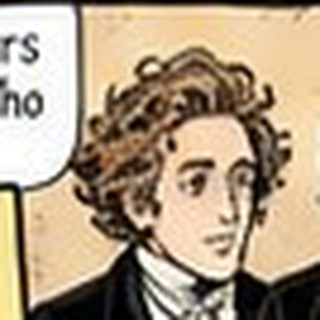
Meet Søren Kierkegaard. Copenhagen, 1800s. A thin, hunched young man with a big head of hair, a walking stick, and trouser legs of slightly different lengths. We know about the trousers because a satirical magazine drew cartoons mocking them, and for a while children followed him down the street shouting the title of his most famous book at him. Philosophy in the 1840s was brutal.
His life was heavy from the start. His father was deeply religious and deeply gloomy, and five of Søren’s six siblings, as well as his mother, died while he was young. He became convinced he wouldn’t live past thirty-four.
Then he fell in love. Her name was Regine Olsen. He proposed, she said yes, and then, almost immediately, he was overwhelmed with doubt. He was sure he’d make her miserable. So he broke off the engagement, and even tried to act cold and cruel so she’d hate him and move on more easily. She married someone else. He never married, and he wrote about her, directly or in disguise, for the rest of his life. When he died at forty-two, he left everything he owned to her.
So yes. When Kierkegaard wrote about anxiety, he knew what he was talking about.
His first big move is a distinction. Fear and anxiety are not the same thing. Fear always has an object. You’re afraid of something: the dog, the exam, the spider. Anxiety has no clear object. You’re anxious about… nothing specific. About what might happen. About possibility itself.
And then comes his famous image. Imagine standing at the edge of a cliff and looking down into the drop. You feel dizzy. But why? Nothing is pushing you. The ground is solid. Kierkegaard says the dizziness comes as much from your own eyes as from the drop. You’re dizzy because you’re looking down and realising: I could fall. I could step forward. Nothing is stopping me except me.
That’s anxiety. Not fear of something outside you, but the dizziness of looking at your own freedom and seeing how much is possible, including things you’d never want to do.
He even goes back to Adam and Eve to explain it. Before God told Adam not to eat from the tree, Adam didn’t think about the tree at all. The moment God said “don’t,” something woke up in Adam: oh. I could. Like being told “whatever you do, don’t press the red button.” Now the red button is all you can think about. It’s not that you want to press it. It’s that you suddenly know you can.
And notice something else: anxiety pulls and pushes at the same time. You step back from the cliff edge, and you also lean forward to look. Kierkegaard said it’s like a sympathy and an antipathy mixed together. You’re scared of the possibility, and you’re strangely drawn to it.
So back to the yoghurt aisle and the free Saturday and the two job offers. Nothing bad is happening. You’re not in danger. You’re just looking down into a big, open space of possibility, and your freedom is making you dizzy.
But Kierkegaard didn’t think anxiety was just a problem to get rid of. He thought it was a teacher. It shows you that you’re free, that your choices matter, that your life is really yours. He wrote that anyone who has learned to be anxious in the right way has learned the most important thing there is. His own answer, in the end, was religious: he believed faith was what allowed you to take the jump despite the dizziness.
And yes, he’s famous for the phrase “leap of faith.” You can guess what’s coming. He wrote a lot about “the leap.” The exact phrase “leap of faith”? Not really his. We’re on a roll.
Freud: Anxiety as an alarm
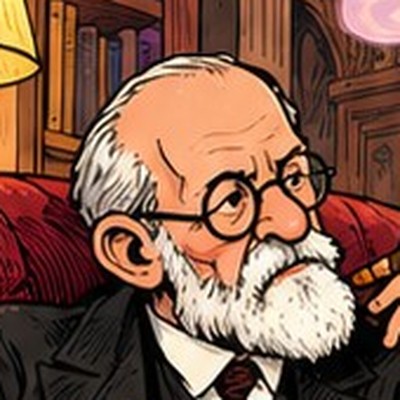
Freud’s first theory of anxiety, from the 1890s, was very mechanical. He thought anxiety was basically built-up pressure. When desires, especially sexual ones, get blocked and can’t be released, the energy doesn’t just disappear. It builds up like steam in a pot with the lid on, and eventually it comes out as anxiety. Blocked desire in, anxiety out.
Thirty years later, he changed his mind completely. And it’s the second theory that really matters.
In 1926, Freud flipped it around. He said: anxiety isn’t just the result of pushing things down. Anxiety is what makes us push things down. It comes first. It’s a signal. An alarm system.
Think of the I, our stressed-out manager from chapter 3. When it senses danger coming, it sets off a small alarm, a little burst of anxiety. That alarm says: careful, something bad might happen. And then the I springs into action, using its defence mechanisms from chapter 4 to deal with the threat.
So where does the danger come from? Freud said there are three kinds of anxiety, depending on which direction the danger comes from.
Realistic anxiety comes from the outside world. A car speeding towards you. A real, specific danger. This is basically what Kierkegaard called fear.
Neurotic anxiety comes from the It. The danger is your own desires: the fear that some urge might break through and get you into trouble.
Moral anxiety comes from the Over-I. That’s guilt and shame. The fear of disappointing the voice in your head that tells you who you should be.
Freud said our alarm system was built in early childhood, when the dangers were very specific. The biggest one of all, for a small child, is losing the person who looks after you. Being left alone. Losing their love.
Freud tells a lovely little story about this. A small boy was in a dark room and called out: “Auntie, talk to me! I’m scared because it’s so dark.” His aunt said: “But what difference does it make? You can’t see me anyway.” And the boy answered: “That doesn’t matter. If someone talks, it gets lighter.”
He wasn’t really afraid of the dark. He was afraid of being alone.
So Freud’s idea is that adult anxiety is often that old childhood alarm, going off in new situations that only resemble the old danger. Like a smoke detector that goes off every time you make toast. The alarm is real. The fire usually isn’t.
Now let’s run those opening moments through Freud’s system.
The free Saturday that makes you tense? Freud might ask: is that moral anxiety? Is the Over-I whispering that you should be productive, that rest has to be earned, that doing nothing is lazy?
The two job offers that keep you up at night? Choosing one means losing the other. And losing things, for the old childhood alarm, is exactly what danger feels like.
The blank page? Maybe it’s not the page. Maybe it’s the voice that says whatever you write won’t be good enough.
So where Kierkegaard looks at anxiety and sees freedom, Freud looks at it and asks: what’s the alarm really responding to? And is it responding to now, or to then?
Is anxiety something to fix?
Tonight: a man who walked the streets of Copenhagen talking to strangers versus a man who sat behind a couch and let strangers talk to him.
What is anxiety actually about?
So Kierkegaard’s anxiety looks forward, into what could be. Freud’s anxiety looks backward, to what once was.
So what do we do with it?
And look what they share: neither of them thinks anxiety is simply a malfunction. For both, it carries information. Something about you is trying to get your attention.
What would they say to each other?
Imaginary, as always. Kierkegaard died in 1855, the year before Freud was born.
So who wins?
No winner, but a really useful question to take away. Next time you feel that tightness in your chest, you can ask:
Is this Kierkegaard’s anxiety, the dizziness of a real, important choice in front of me? Or is this Freud’s anxiety, an old alarm from long ago, going off because something today looks a bit like back then?
Often, honestly, it’s both. The two job offers are a real choice. And choosing one means losing the other, which wakes up every old fear of losing something you love.
Knowing which part is which won’t make the feeling disappear. But it might help you decide whether to step back from the edge, or finally take the leap.
You’ve seen this before
No-jokes box
The pseudonym: Kierkegaard’s The Concept of Anxiety (1844) was published under the pseudonym Vigilius Haufniensis (“the Watchman of Copenhagen”). Kierkegaard used many pseudonyms, each presenting a different perspective, and in “A First and Last Explanation” (appended to Concluding Unscientific Postscript, 1846) he acknowledged authorship while asking that quotations be attributed to the pseudonyms.
The word: Kierkegaard’s Danish Angest and Freud’s German Angst are usually translated as “anxiety” (older translations of Kierkegaard use “dread”). The English loanword “angst,” often used for teenage moodiness, is much narrower than either thinker’s meaning.
Søren Kierkegaard (1813–1855): Danish philosopher and theologian, often called the father of existentialism. Key works include Either/Or (1843), Fear and Trembling (1843), The Concept of Anxiety (1844) and The Sickness unto Death (1849). He broke off his engagement to Regine Olsen in 1841, an event that shaped much of his writing.
Kierkegaard on anxiety: He distinguished fear, which has a definite object, from anxiety, which relates to possibility and has no definite object. He compared anxiety to the dizziness of someone looking down into an abyss, and called it “the dizziness of freedom.” Using Adam’s prohibition in Eden, he described how awareness of what one can do produces anxiety. Anxiety is ambiguous, both attracting and repelling (“a sympathetic antipathy and an antipathetic sympathy”). He saw anxiety not only as suffering but as an educator: learning “to be anxious in the right way” is, for him, the most important lesson. His ultimate answer was religious faith. He wrote of “the leap”; the phrase “leap of faith” is a later summary.
Freud on anxiety: Freud first saw anxiety as transformed, blocked sexual energy (1890s). In Inhibitions, Symptoms and Anxiety (1926), he revised this: anxiety is a signal produced by the ego in response to perceived danger, which then sets defences in motion. In the New Introductory Lectures (1933) he distinguished realistic anxiety (external danger), neurotic anxiety (danger from the id’s impulses) and moral anxiety (danger from the superego, experienced as guilt or shame). He traced adult anxiety to early dangers, especially separation from caregivers and the loss of their love, illustrated by the child in the dark who says that when someone speaks, “it gets lighter” (Three Essays on the Theory of Sexuality, 1905).
Where they meet: Both treat anxiety as meaningful rather than simply a malfunction, and both distinguish it from ordinary fear of a specific object.
Where they differ: For Kierkegaard, anxiety is oriented towards the future and is rooted in human freedom and possibility; it should be faced and learned from. For Freud, anxiety is a signal of danger, often rooted in childhood experiences and reactivated in the present; understanding its source can reduce its power.
A note: The ideas in this chapter are philosophical and psychoanalytic theories. Anxiety that is persistent or interferes with daily life is worth discussing with a doctor or mental health professional.
Where to go next:
- Kierkegaard: A Very Short Introduction by Patrick Gardiner.
- The Concept of Anxiety, especially the introduction and final chapter. Demanding, but short in places.
- Freud’s New Introductory Lectures, lecture 32, “Anxiety and Instinctual Life,” the clearest summary of his mature view.
- Fear and Trembling, if you want to see Kierkegaard at his most dramatic.
Homework