Why can’t society just let me be happy?
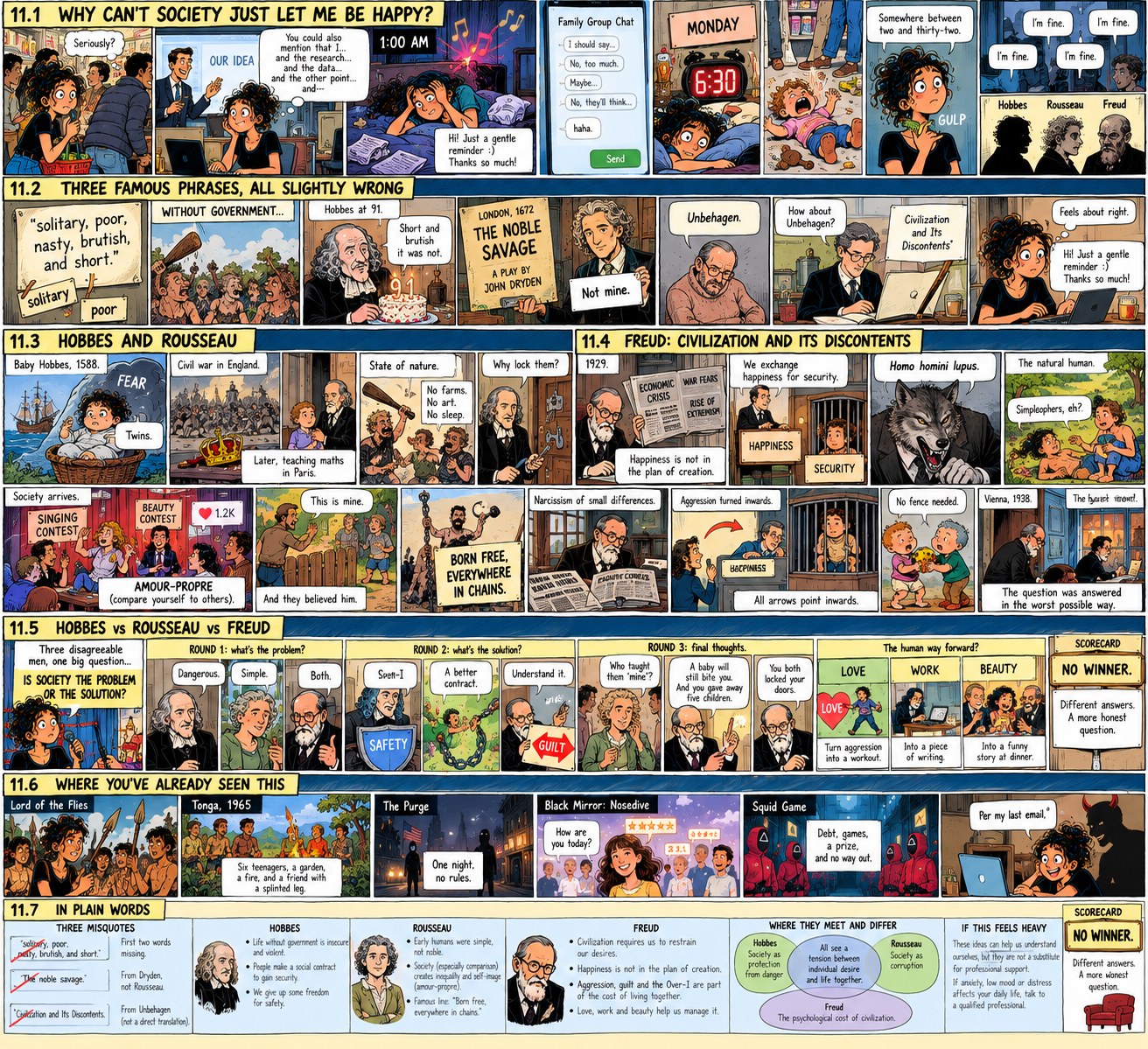
Someone pushes in front of you in the supermarket queue. You say nothing. You think about it for the rest of the afternoon.
Your colleague presents your idea in a meeting as if it was theirs. You smile and nod. Inside, you’re writing a very long speech you’ll never give.
It’s 1am and your neighbour’s music is shaking the walls. You write a note. The first draft is unprintable. The final version says: “Hi! Just a gentle reminder about noise after 11 :) Thanks so much!”
Someone in the family group chat says something that makes your blood boil. You type a reply. Delete it. Type another. Delete it. Send: “haha.”
Monday morning, the alarm goes off. Every part of you wants to stay in bed, call in “sick” and eat cereal in front of the TV. You get up, get dressed, and go.
Now watch a two-year-old for ten minutes. Another kid takes his toy, he screams, grabs it back, maybe bites someone. He’s hungry, he cries. He’s tired, he lies down on the floor wherever he is. No gentle reminders. No “haha.”
Somewhere between two and thirty-two, we learned to swallow almost everything. And most of the time, that’s a good thing. Nobody wants to live in a world where adults bite each other in the supermarket.
So if society is supposed to make life better, why does being a well-behaved, polite, reasonable adult feel so exhausting? Why is everyone “fine,” and also so tired?
Three men had three very different answers. One said people are dangerous and need rules to stop them destroying each other. One said people are naturally good, and it’s society that ruins them. And one looked at both and said: you’re both right, and that’s exactly the problem.
Three famous phrases, all slightly wrong
But first, the full line has five adjectives, not three: life would be “solitary, poor, nasty, brutish, and short.” Everyone forgets the first two. And second, and much more important, he wasn’t describing life in general. He was describing what life would be like without any government, rules or society. No laws, no police, no agreements. In that situation, he said, life would be nasty, brutish and short. His whole point was that we need society to avoid that.
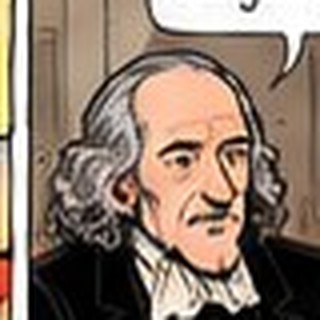
Hobbes lived to be ninety-one, which in the 1600s was practically immortal. His life was long, comfortable, and full of arguments. Short and brutish it was not.
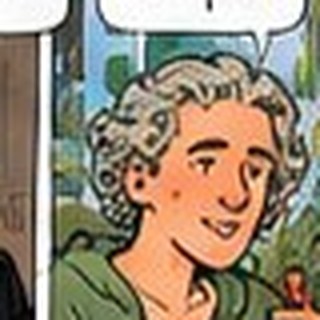
Rousseau never used the phrase “noble savage.” It comes from an English play by John Dryden, written in 1672, decades before Rousseau was born. Rousseau’s actual idea was more complicated and more interesting: he thought people in their original state weren’t especially noble at all. They were just simple, mostly alone, and not yet corrupted by comparing themselves to everyone else. We’ll get to that.
In German, it’s Das Unbehagen in der Kultur. Unbehagen is a hard word to translate. It means something like unease, discomfort, that feeling of not being quite at home, like wearing clothes that are slightly too tight all day. Freud first thought about calling it “Unhappiness in Civilization.” When it was translated into English, he suggested “Man’s Discomfort in Civilization.” The translator went with Civilization and Its Discontents instead. It stuck.
It’s a great title. But Freud’s version is more honest about what the book describes: not a dramatic rebellion, just a constant, low-level feeling of being uncomfortable in your own life. The “Hi! Just a gentle reminder :)” feeling.
Hobbes and Rousseau: The beast and the good savage
Meet Thomas Hobbes. England, 1588. According to Hobbes himself, his mother went into labour early because she was terrified by news that the Spanish Armada was about to invade. He later wrote that fear and he were born twins. Which tells you a lot about the rest of his philosophy.
Hobbes lived through the English Civil War: the country tearing itself apart, the king put on trial and beheaded. He spent years in exile in Paris, where he tutored the future King Charles II in maths. So when he sat down to write his big book, Leviathan, in 1651, he’d seen up close what happens when order collapses.
His thought experiment goes like this. Imagine there’s no government. No laws, no police, no courts. What would people do?
Hobbes says: people are roughly equal. Not in a nice way. In the sense that anyone can kill anyone. Even the weakest person can kill the strongest in his sleep, or by teaming up with others. So everyone is a threat to everyone. And people want the same things, they don’t trust each other, and they want to be respected. Put that together, and you get what Hobbes called a war of everyone against everyone. No farming, no trade, no art, no science, because nobody can plan for tomorrow. Just fear. That’s where life becomes “solitary, poor, nasty, brutish, and short.”
And if you think he’s exaggerating, Hobbes has a very annoying question for you. Why do you lock your front door at night? Why do you lock your car? Why do you keep a password on your phone, even from the people you live with? What does that say about what you really think of other people?
His solution: everyone agrees to give up their right to do whatever they want, and hands power to a strong ruler, the Leviathan (named after a giant sea monster from the Bible), who keeps the peace. You lose some freedom. In return, you get safety. That’s the deal. That’s society.
Now meet Jean-Jacques Rousseau. Geneva, 1712. A watchmaker’s son whose mother died shortly after he was born. He ran away as a teenager and spent years wandering, working odd jobs, and falling in and out of love. Later he became one of the most famous writers in Europe, including a hugely influential book about how to raise children. Slightly awkward detail: he gave all five of his own children away to an orphanage. Philosophers, eh?
Rousseau told the opposite story. In the original state of nature, he said, people weren’t at war. They were mostly alone, wandering in the forest, with very simple needs: food, sleep, rest. They had a healthy kind of self-love, just wanting to survive and be comfortable. And they had natural pity: a basic, gut-level reluctance to see others suffer. Not noble. Not heroic. Just simple, and not especially dangerous.
So what went wrong? Society. Once people started living together, they started comparing themselves to each other. Who’s the best singer? Who’s the strongest? Who’s the most beautiful? And a new kind of self-love was born, one that depends completely on what other people think of you. Rousseau called it amour-propre. It’s the reason you check how many likes you got. It’s envy, vanity, pride and shame, all in one package.
And then came property. Rousseau wrote that the real founder of society was the first person who put a fence around a piece of land, said “this is mine,” and found people simple enough to believe him. From that moment: inequality, jealousy, competition, crime.
His most famous line sums it up: man is born free, and everywhere he is in chains.
So there you have it. Hobbes: without society, we’d destroy each other. Rousseau: society is what made us destructive in the first place.
Now, which one’s right? A certain Viennese doctor, writing in 1930, had a very uncomfortable answer.
Freud: Civilization and Its Discontents
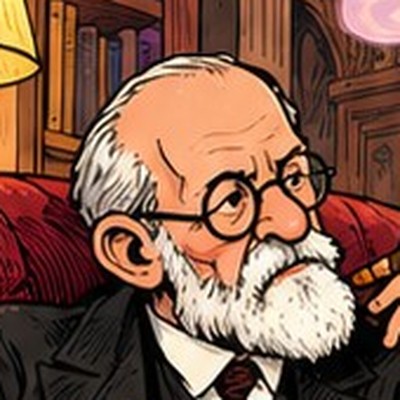
It’s 1929. Freud is seventy-three. He’s been fighting cancer in his mouth for six years. Europe is still recovering from the First World War, the economy is collapsing, and in Germany, a political party called the Nazis is getting stronger. Freud sits down and writes a short book about why human beings find it so hard to be happy together.
He starts with a sad sentence that could be a tattoo: the idea that humans should be happy, he says, just doesn’t seem to be part of the plan of creation.
Then he gets to the heart of it. Civilisation, he says, is built on a trade-off. Every one of us has powerful urges: sexual desire and aggression, the It from chapter 3. If everyone acted on them freely, society would fall apart. So civilisation asks us to give them up, or at least hold them back. In exchange, we get safety, order and cooperation. We swap some of our happiness for security.
Sound familiar? That’s Hobbes’s deal. Freud even quotes the old Latin saying Hobbes loved: homo homini lupus, man is a wolf to man. Look at history, Freud says, and try to argue with that.
So is Freud on Hobbes’s side? Mostly, yes. And he goes straight for Rousseau’s big idea. Some people in Freud’s time believed that if you abolished private property, human aggression would disappear. Rousseau’s fence, basically: get rid of “this is mine,” and people become good again. Freud says: nice idea, but no. Aggression was there long before property. Watch children in a nursery fighting over toys. Aggression isn’t created by fences. It’s part of us.
He even noticed a funny detail about it. The groups that fight most bitterly usually aren’t the most different. They’re the ones that are almost the same: neighbouring towns, neighbouring countries, rival football clubs from the same league. He called it the narcissism of small differences. We save our fiercest hatred for people who are basically us, with a slightly different accent.
Then Freud goes somewhere neither Hobbes nor Rousseau went. He asks: when civilisation forces us to hold back our aggression, where does it go?
It doesn’t disappear. It turns inwards. Remember the Over-I from chapter 3, the voice of your parents in your head? Civilisation feeds it. All the aggression you’re not allowed to aim at other people gets handed to the Over-I, which aims it at you. That’s guilt. That’s the voice that says you’re not good enough, you should be doing more, you should be ashamed.
So the more civilised we become, the more polite, controlled and well-behaved, the more guilt we carry. Freud said guilt was the most important problem in the development of civilisation. The price of progress, he wrote, is a loss of happiness through a growing sense of guilt.
Now go back to the start of this chapter. The “Hi! Just a gentle reminder :)” note. The “haha” in the group chat. The smile in the meeting. The anger didn’t vanish. It went inside. And that’s why everyone’s “fine,” and also exhausted.
Freud ended the book by describing civilisation as a constant struggle between two forces: love, which brings people together, and aggression, which tears them apart. And he finished with a question: can humanity learn to control its own destructive drive?
A year later, as the Nazis gained power, he added one final sentence to the new edition. Basically: and who can predict how it will turn out?
He had to flee Vienna in 1938. He died in London the following year, just after the Second World War began. The question at the end of his book was answered in the worst possible way.
Is society the problem, or the solution?
Tonight: an Englishman who was born afraid, a Swiss-French wanderer who loved the forest, and a Viennese doctor who’d seen where it all leads.
What are people like underneath?
So what does society actually do to us?
What would they say to each other?
Imaginary, as always.
So who wins?
Hobbes explains why we need society. Rousseau explains what society costs us. And Freud puts them together: we can’t live without civilisation, and we’ll never be completely happy inside it.
That sounds depressing, but it’s actually quite freeing. That tired, “fine but not fine” feeling isn’t a sign that you’re failing at adult life. It’s the normal price of living with other people.
So the real question isn’t how to get rid of the discomfort. It’s what to do with it. Freud’s own suggestions, in the same book, were quite simple: love, meaningful work, and beauty. And remember sublimation from chapter 4? Turning frustration into something useful. The anger you didn’t express at the neighbour could become a killer workout, a brilliant piece of writing, or at least a very funny story at dinner.
Just maybe not a second, less polite note.
You’ve seen this before
No-jokes box
The misquotes: Hobbes’s full phrase describes life in the state of nature, without government, as “solitary, poor, nasty, brutish, and short” (Leviathan, 1651, chapter 13); it is not a claim about life in general. Rousseau never used the phrase “noble savage,” which comes from John Dryden’s play The Conquest of Granada (1672). Freud’s Das Unbehagen in der Kultur (1930) might be more literally rendered “Unease in Culture”; the English title Civilization and Its Discontents was chosen by the translator, Joan Riviere, after Freud suggested “Man’s Discomfort in Civilization.”
Thomas Hobbes (1588–1679): English philosopher. In Leviathan, written after the English Civil War, he argued that in the state of nature, humans’ rough equality, competition, distrust and desire for glory would produce a “war of every man against every man.” To escape it, people agree to transfer their right of self-government to a sovereign power. This is a founding text of social contract theory.
Jean-Jacques Rousseau (1712–1778): Genevan philosopher and writer. In the Discourse on the Origin of Inequality (1755), he argued that natural humans were solitary, had few needs, and were guided by healthy self-love (amour de soi) and natural pity. Society introduced amour-propre, self-love dependent on others’ opinions, along with private property and inequality. The Social Contract (1762) opens: “Man is born free, and everywhere he is in chains.” His solution was not a return to nature but a legitimate society based on the “general will.”
Freud’s Civilization and Its Discontents: Civilisation requires individuals to renounce or restrain sexual and aggressive drives, exchanging “a portion of his possibilities of happiness for a portion of security.” Freud held that aggression is innate, not caused by property or social arrangements, quoting homo homini lupus (“man is a wolf to man”). He described the narcissism of small differences: hostility is often strongest between closely similar groups. Civilisation manages aggression by turning it inward via the superego, producing guilt, which Freud called “the most important problem in the development of civilization.” He framed civilisation as a struggle between Eros (love, binding people together) and the drive towards aggression and destruction. The book’s closing sentence, added in 1931, left open whether humanity would master its destructive drive.
Where they meet: All three see society as a response to human nature, and all three recognise that living together requires giving something up.
Where they differ: Hobbes sees society as rescuing us from our dangerous nature. Rousseau sees society as the source of much human corruption, while seeking a fairer social arrangement. Freud agrees with Hobbes that aggression is innate, but adds that civilisation’s control of it has a psychological cost: guilt and chronic unhappiness.
Where to go next:
- Freud’s Civilization and Its Discontents (1930). Short and one of his most readable books.
- Hobbes’s Leviathan, chapter 13, “Of the Natural Condition of Mankind.”
- Rousseau’s Discourse on the Origin of Inequality, especially Part Two, which opens with the fence.
- Humankind: A Hopeful History by Rutger Bregman, for a modern argument on Rousseau’s side (and the Tonga story).
Homework